
Red Light Therapy Benefits for Anti-Aging, Pain Relief, and Skin Rejuvenation
Red light therapy is now a standard offering at dermatology clinics, physical therapy offices, and medical spas across the country, including in Cache Valley, Utah. If you have been researching this treatment and want a straightforward look at what the current evidence actually supports, this guide covers the biology behind it, the conditions it is most commonly used for, realistic expectations, and how to find a qualified provider in the Logan area.
What Is Red Light Therapy?
Red light therapy, also referred to as photobiomodulation (PBM) or low-level laser therapy , is a non-invasive treatment that delivers specific wavelengths of red and near-infrared light to the skin and underlying tissue. Therapeutic devices typically operate within the 630 to 850 nanometer range. Within this range, red light (roughly 630 to 700 nm) primarily affects surface tissue, while near-infrared light (700 to 850 nm) penetrates more deeply into muscles and joints.
The treatment does not involve UV light and does not generate enough heat to damage tissue. Its proposed mechanism centers on the mitochondria. Research suggests that certain wavelengths of light may stimulate cytochrome c oxidase, a key enzyme in the mitochondrial respiratory chain, leading to increased production of adenosine triphosphate (ATP). Since ATP is the primary energy currency of cells, this may support a range of repair and regeneration processes depending on the tissue involved.
Red Light Therapy for Skin Rejuvenation
Skin health is one of the most clinically studied applications of red light therapy. The evidence base here is more developed than in many other areas, and several controlled clinical trials have produced encouraging results.
Collagen Production and Skin Firmness
Collagen is the structural protein that gives skin its firmness and elasticity. Fibroblasts, the cells responsible for producing collagen and elastin, appear to respond to red light stimulation. A study published in Photomedicine and Laser Surgery found that participants who received red light therapy showed significant improvements in skin complexion and collagen density as measured by ultrasound imaging.
Production of new collagen takes time. Most patients undergoing a structured course of red light therapy report gradual improvements in skin firmness and texture over several weeks rather than immediately following individual sessions.
Fine Lines and Wrinkle Reduction
Multiple clinical studies have examined the effect of repeated red light sessions on wrinkle depth. A notable study in which participants received twice-weekly treatments over 15 weeks found measurable reductions in fine lines and improvements in overall skin tone. The authors attributed this to enhanced fibroblast activity and improved dermal structure.
At a medical spa in Logan, red light therapy is sometimes incorporated into skin health protocols alongside other treatments to support cumulative results.
Skin Tone, Redness, and Inflammation
Beyond wrinkles, red light therapy may help reduce chronic skin redness and improve overall tone. Some research suggests it may calm inflammatory responses in skin tissue, which is relevant for conditions involving persistent redness or sensitivity. Results in this area tend to vary more between individuals and may depend on the severity of the underlying condition.
Red Light Therapy for Anti-Aging
The anti-aging applications of this treatment extend beyond surface skin improvements. Because it works at the mitochondrial level, its potential effects touch on cellular processes associated with biological aging more broadly.
Cellular Energy and Maintenance
Mitochondrial efficiency tends to decline with age, which affects the ability of cells across many tissue types to repair and maintain themselves. By potentially enhancing mitochondrial function, red light therapy is thought to support cellular maintenance in ways that go beyond cosmetic outcomes. This is part of why refined wellness practitioners sometimes discuss it in the context of general health support rather than purely as a skin treatment.
Tissue Healing and Recovery
Research has explored red light therapy's role in accelerating wound healing and reducing scar formation. This has practical relevance after cosmetic procedures as well. Some providers in the valley aesthetics space use it as a supportive measure after treatments like injectables or microneedling to help reduce post-treatment inflammation and support tissue recovery.
Hair Follicle Stimulation
Several clinical trials have examined red light therapy for androgenetic alopecia, the most common form of hair thinning in both men and women. A 2014 randomized controlled trial published in Lasers in Surgery and Medicine found that low-level laser therapy produced a statistically significant increase in hair density compared to a sham device. Results vary between individuals and appear dependent on consistent, long-term use.
What to Expect During a Session
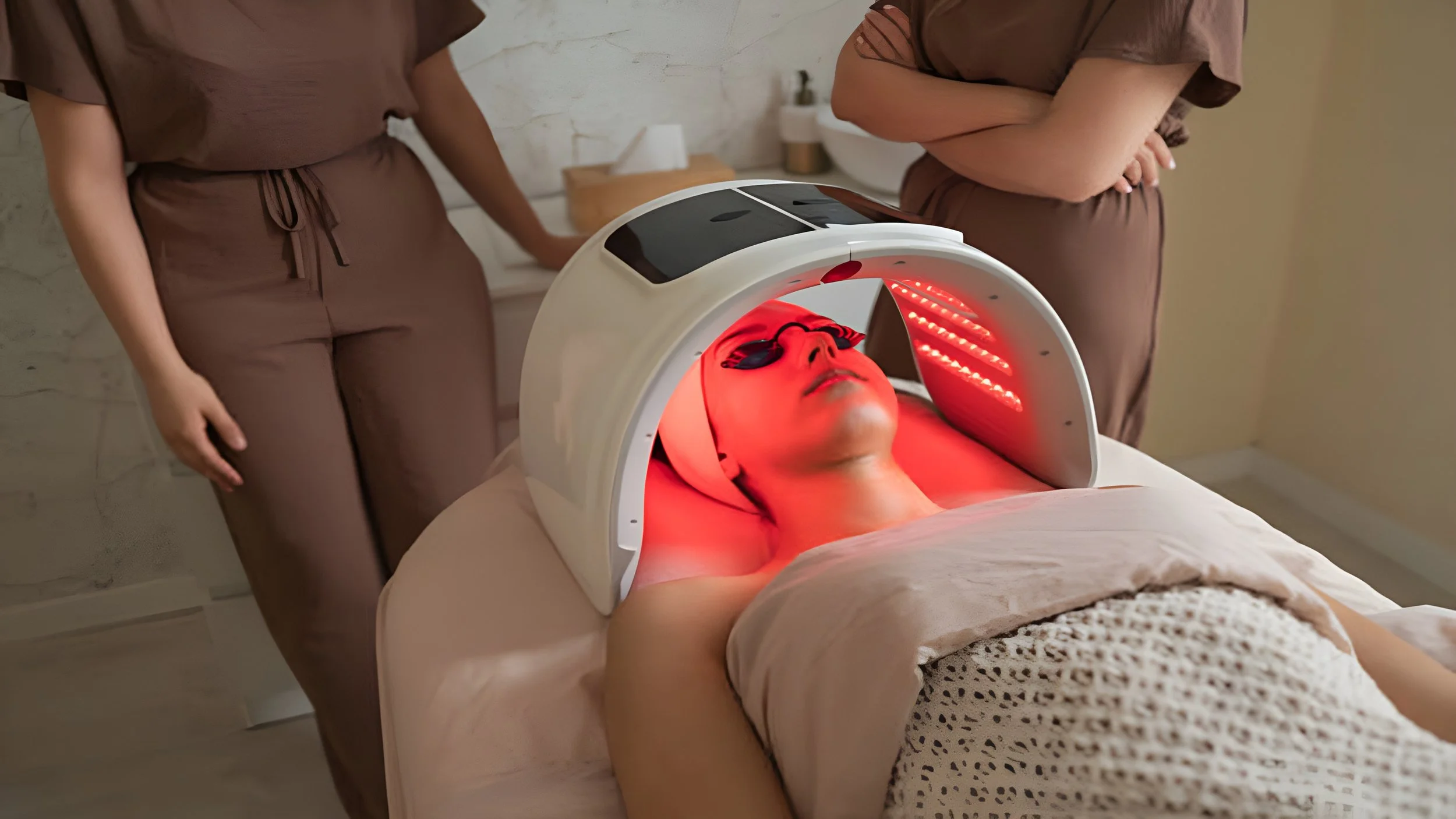
Sessions are straightforward. You will be positioned in front of or beneath a panel of red and near-infrared LEDs for a set duration, typically between 10 and 20 minutes. Some people notice mild warmth from the device, but the experience is generally comfortable.
There is no UV exposure, no skin damage, and no recovery period. You can resume normal activities immediately afterward. Eye protection is typically provided or recommended, as prolonged direct light exposure can cause discomfort.
How Many Sessions Are Typically Needed?
For skin-related goals, most clinical protocols involve two to three sessions per week for a minimum of four to eight weeks. Pain management applications may follow a similar schedule initially, with maintenance sessions as needed. The research consistently shows that consistent, repeated exposure produces better outcomes than irregular single sessions. Realistic expectations matter here. This is not a one-session treatment.
Safety Considerations
Red light therapy at appropriate doses has a strong safety profile in healthy adults. It does not produce ionizing radiation, does not involve UV light, and does not ablate or damage the skin surface.
Situations where caution or medical clearance may be appropriate include active cancer treatment, use of photosensitizing medications, pregnancy, and certain photosensitive conditions. Patients should always disclose their full health history to a provider before beginning treatment.
Finding Red Light Therapy in Logan, Utah
If you are searching for beauty salons in Logan Utah or wellness facilities offering red light therapy in the Cache Valley area, it is worth distinguishing between clinical-grade professional equipment and consumer-level home devices.
Professional panels used in clinical and medical spa settings generally deliver higher and more consistent irradiance than most home units, which can affect how efficiently therapeutic doses are reached. A supervised setting also allows a provider to tailor session frequency and duration to your specific concerns.
Refined Aesthetics in Logan, Utah offers red light therapy as part of a broader range of skin health and wellness services. Their approach emphasizes patient education and honest, realistic guidance on what treatment may or may not achieve for each individual.
Conclusion
Red light therapy is a non-invasive, well-researched option for people interested in supporting skin health, managing certain types of pain, and addressing some of the cellular changes associated with aging. The evidence is more developed in some areas than others, and results will vary depending on the individual and the consistency of treatment.
For residents of Logan, North Logan, and the broader Cache Valley region, professional red light therapy is available locally. If you would like to understand whether this treatment is a reasonable fit for your specific concerns and health history, speaking with a qualified provider is the most useful next step.
To learn more or to schedule a consultation, contact the team at Refined Aesthetics. They can answer questions specific to your situation and help you decide whether red light therapy, or another service, is appropriate for your goals.
Medical Disclaimer: This article is intended for educational purposes only and does not constitute medical advice. Red light therapy may not be suitable for everyone. Individual results vary. Please consult with a qualified healthcare provider before beginning any new treatment, particularly if you have existing health conditions or are taking medications.
Frequently Asked Questions
-
Most people undergoing a structured protocol of two to three sessions per week begin noticing changes after four to six weeks. Skin-related changes such as improved tone and reduced fine lines develop gradually as collagen remodeling takes place over time. Pain relief may appear sooner in some individuals, though this depends on the condition being treated and treatment adherence.
-
In many cases, yes. Providers often use it as a supportive measure after procedures like injectables or microneedling to help reduce inflammation and support healing. If you are receiving other medical treatments, it is worth discussing the combination with your provider before proceeding to ensure there are no contraindications.
-
No. These are distinct treatments. Infrared saunas use far-infrared wavelengths primarily to generate heat, promoting sweating and cardiovascular effects. Red light therapy uses specific red and near-infrared wavelengths at lower intensities to stimulate cellular responses without significant heat generation. The mechanisms and clinical applications are different.
-
Side effects are generally rare and mild. Some individuals experience temporary redness or warmth in treated areas immediately following a session. Direct, prolonged exposure of the eyes to the device lights can cause discomfort, which is why eye protection is used. People taking medications that increase photo sensitivity should consult their doctor before beginning treatment.
-
Professional devices used at a refined aesthetics practice or clinical setting are designed to deliver precise, consistent irradiance levels across a treatment area. Most consumer home panels operate at lower power outputs, which may require longer or more frequent sessions to approach similar doses. For initial treatment courses aimed at specific clinical goals, professional sessions tend to provide a more controlled and measurable experience. Home devices may serve a role in maintenance between clinic visits.
