
PRF Injections for Hair Loss: How Does PRF Support Thinning Hair?
Thinning hair is one of the most common concerns adults bring up with their provider. It affects people of all ages and genders. Many products promise thicker hair. Few are backed by science the way PRF injections are.
If you have been researching PRF injections, this guide breaks down what they are, how they work on the scalp, and what results you can realistically expect. At Refined Aesthetics, we work with clients who want a non-surgical way to support fuller, healthier hair. PRF injections are one of the treatments we are asked about most.
This article walks through the science, the process, and honest expectations around PRF injections for hair restoration. That way, you can decide if this treatment fits your hair goals.
What Are PRF Injections?
PRF stands for platelet rich fibrin. PRF injections are created using your own blood. The process is similar to PRP, but with a few key differences that make it useful for hair restoration.
To create PRF injections, a small amount of blood is drawn. It is then spun in a centrifuge. This separates platelets, growth factors, and plasma from red blood cells. PRF uses a slower spin than PRP. This slower speed keeps more white blood cells in the mixture. It also forms a fibrin matrix. This matrix holds the platelets together in a gel-like structure.
This matters for one reason. The fibrin scaffold releases growth factors slowly into the scalp. It does not release them all at once. This slow, steady release gives hair follicles more time to respond.
How Do PRF Injections Help With Thinning Hair?
This is the main question people ask before booking a consultation. Let's walk through it step by step.
Hair follicles need healthy blood flow. They also need the right cellular signals to stay active. When hair thins, follicles often shrink. They may also get less blood flow. Many shift into a resting phase more often than a growth phase.
PRF injections are placed directly into the scalp at the follicle level. The platelets and growth factors in the fibrin matrix may:
Support increased blood flow to the treated area
Help follicles stay in the active growth phase longer
Provide signals that may thicken existing hair shafts
Support the health of tissue around each follicle
Because the fibrin matrix releases these factors slowly, the scalp gets ongoing exposure to growth signals. This can last for weeks after each session. This is one reason PRF injections have become a popular option for people in the early to moderate stages of thinning.
It helps to be clear about limits. PRF injections are not a cure for genetic hair loss. They will not regrow hair in areas where follicles have been dormant for years. PRF injections work best on follicles that are still active but weakened.
Who Is a Good Candidate for PRF Injections?
Not everyone sees the same results from PRF injections. Candidacy matters. During a consultation, a provider looks at the pattern and stage of thinning. They also review your health history and expectations.
Good candidates for PRF injections often include people who:
Are in the early to moderate stages of hair thinning
Have a family history of pattern hair loss but still have visible, thinner hair
Notice shedding linked to stress, hormones, or postpartum changes
Want a non-surgical option before more invasive procedures
Are in good general health, with no active scalp infections or certain blood disorders
People with fully bald areas may not see strong results from PRF injections alone. This is because the treatment relies on stimulating follicles that still exist. A consultation is the best way to get an honest answer about whether PRF injections make sense for you.
What Happens During a PRF Injections Appointment?
Understanding the appointment can ease some nerves. A typical PRF injections session follows a clear process.
Step 1: Blood Draw
A small vial of blood is drawn from your arm. This is much like routine bloodwork. It is quick and simple.
Step 2: Centrifuge Processing
The blood goes into a centrifuge. This separates the PRF from the rest of the blood. The process takes a few minutes.
Step 3: Scalp Preparation
While the blood processes, your scalp is cleansed. A numbing cream may also be applied for comfort.
Step 4: Injections
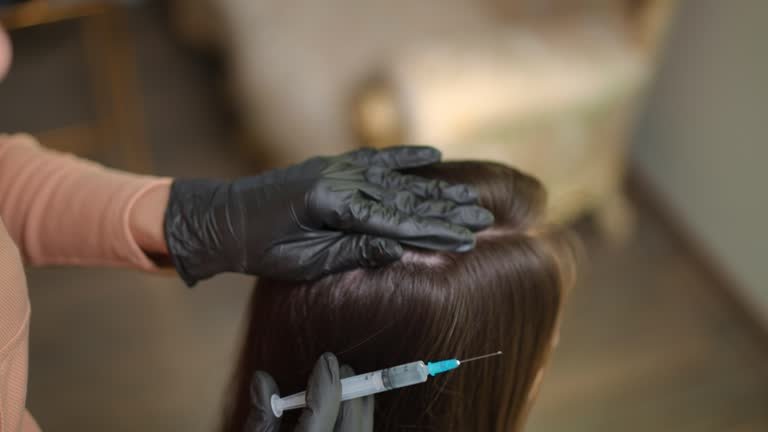
Using a fine needle, PRF is injected into the scalp. Injections follow a grid pattern across the thinning area. Most sessions take 30 to 45 minutes.
Are PRF Injections Painful?
Comfort levels vary. Most people describe PRF injections as mild pinching or pressure. It is not sharp pain. Numbing cream before treatment helps reduce discomfort. Some tenderness or a mild headache may follow. This usually fades within a day or two.
How Many PRF Injections Sessions Are Needed?
Hair grows in cycles. One PRF injections session is rarely enough for noticeable change. Most plans include an initial series. Maintenance visits follow after that. The number of sessions depends on your degree of thinning and how you respond to treatment. This is why an in-person consultation matters before starting any plan.
PRF Injections as Part of a Full Hair and Wellness Routine
PRF injections tend to work best as part of a broader routine, not as a stand-alone fix. Nutrition, stress levels, scalp circulation, and daily hair care all affect how hair looks over time.
Some clients pair PRF injections with other treatments at our med spa. A combined approach can address different hair and skin concerns at once. For clients dealing with unwanted hair growth elsewhere on the body, we also offer laser hair removal in Logan, Utah. This treatment uses a different method than PRF injections, but it is a popular add-on for people already focused on hair care.
Whether you want laser treatment for hair removal on the legs or face, or laser hair reduction to cut down on ingrown hairs, our team can explain how these services fit alongside a PRF injections plan. If you have searched for laser hair reduction near me while researching thinning hair, ask about both during one visit. Many clients handle several concerns in a single appointment.
Why Choose a Med Spa for PRF Injections
Where you get PRF injections matters as much as the treatment itself. A qualified provider will assess your scalp properly. They will use sterile technique during blood processing and injections. They will also set expectations based on your specific thinning pattern, not generic promises.
When comparing providers for PRF injections, look for one who explains the process clearly. They should answer questions about candidacy and be upfront about how many sessions you may need. If you are comparing beauty salons in Logan Utah to dedicated med spas, remember that PRF injections involve blood draws and injections. This makes it a medical procedure. It should happen in a clinical setting with trained staff, not a salon.
At Refined Aesthetics, we lead with education. We want clients to understand what PRF injections can realistically do before committing to a session series. Our consultation process focuses on your history, your goals, and an honest look at whether PRF injections fit your needs.
Common Myths About PRF Injections for Hair Loss
There is a lot of information online about PRF injections. Not all of it is accurate. Let's clear up a few common myths.
Myth: PRF injections work the same for everyone. Response varies based on the cause and stage of thinning, overall health, and how consistently you follow up on sessions.
Myth: One session is enough. Hair growth cycles take time. Most people need a series of PRF injections, followed by maintenance visits.
Myth: PRF injections can regrow hair anywhere. PRF injections support existing, active follicles. They are not designed to create new follicles in fully bald areas.
Myth: PRF and PRP are the same. While related, the processing method and fibrin content differ. This changes how growth factors release into the scalp.
Conclusion
PRF injections offer a science-backed, non-surgical option for adults noticing thinning hair. This is especially true in the early stages, when follicles are still active but weakened. By using your own blood and a slow-release fibrin matrix, PRF injections aim to support blood flow, extend the active growth phase of follicles, and gradually improve hair thickness. Results take time and usually need a series of sessions, but for the right candidate, PRF injections can play a meaningful role in a broader hair and scalp health routine.
Ready to take the next step? Book your consultation today and start your PRF injections journey with a team that explains every step of the process.
Frequently Asked Questions
-
PRF injections use concentrated platelets and growth factors from your own blood, held in a fibrin matrix, to support blood flow and keep active follicles in their growth phase longer. This can lead to gradually thicker, fuller hair over a series of sessions.
-
No. Both come from blood, but PRF injections use a slower centrifuge speed and keep a fibrin matrix that releases growth factors gradually. PRP releases them faster.
-
Most plans include an initial series spaced several weeks apart, followed by maintenance visits. The exact number depends on your stage of thinning and how your scalp responds.
-
Since PRF injections use your own blood, allergic reaction risk is low. Mild redness or tenderness at injection sites is common and usually fades within a few days.
-
Most clients notice less shedding around one to two months after starting PRF injections. Fuller-looking hair often becomes visible around the three to six month mark.
